


Ski Tips
Tip 1
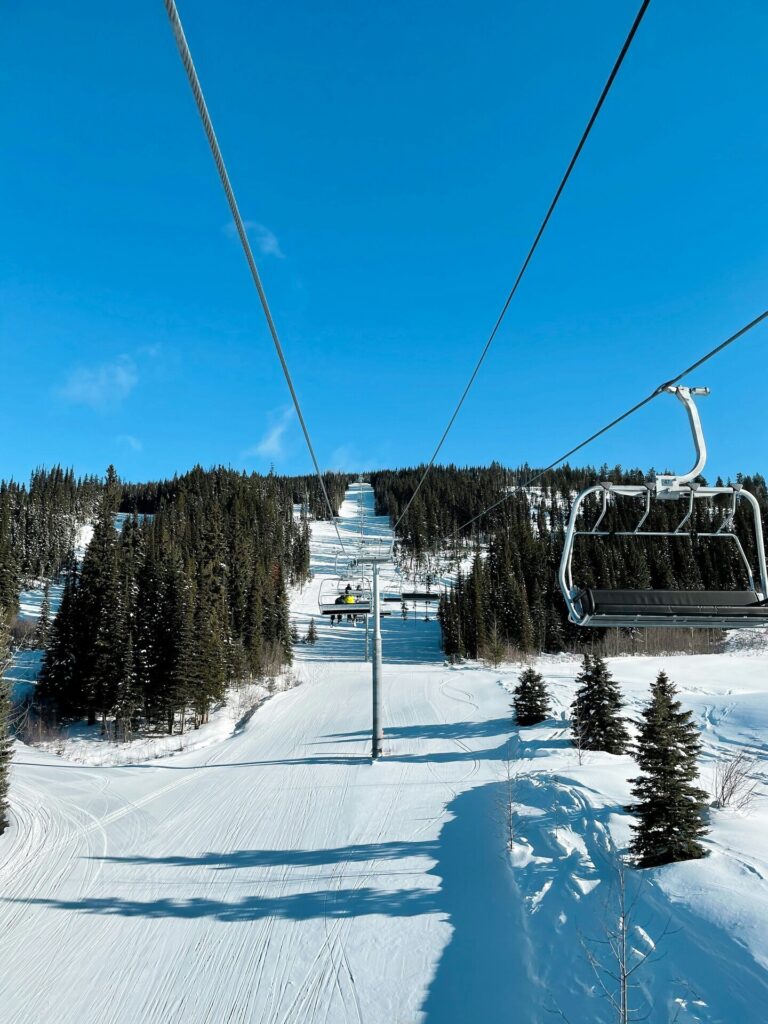
Pre-Season Thoughts
As the ski season approaches there are many ways to get ready for it so that you get off to a good start. It’s always a good idea to get into shape paying particular attention to your leg and stomach muscles. Burning thighs halfway down a ski run is pretty common so the stronger those muscles are, the easier it will be. Stomach muscles, on the other hand, have to be strong so that you can recover when you lose your balance.
Look for a conditioning class near where you live, or set up your own program of knee bends and sit ups. There are lots of books available with pre-season training programs for skiing.
Personally I like to use cross training to get in shape for skiing and I find that the crisp fall air invigorates me. I find that power skating, roller blading and bicycling to be great for the ski muscles.
For your first run of the year, pick an easy slope and do as many short quick turns as you can seeking a centered balanced position and once again finding the rhythm as your weight moves from foot to foot. You will find that if you can get on the balls of your feet the turns will be easier. It’s always a good idea to take a private lesson early in the season as an experienced ski pro can help you avoid building bad habits. It’s really good to take a lesson if you’ve purchased new carving skis as the best technique for them is definitely different and you won’t get the full benefit out of the skis unless you do it right.
Tip 2
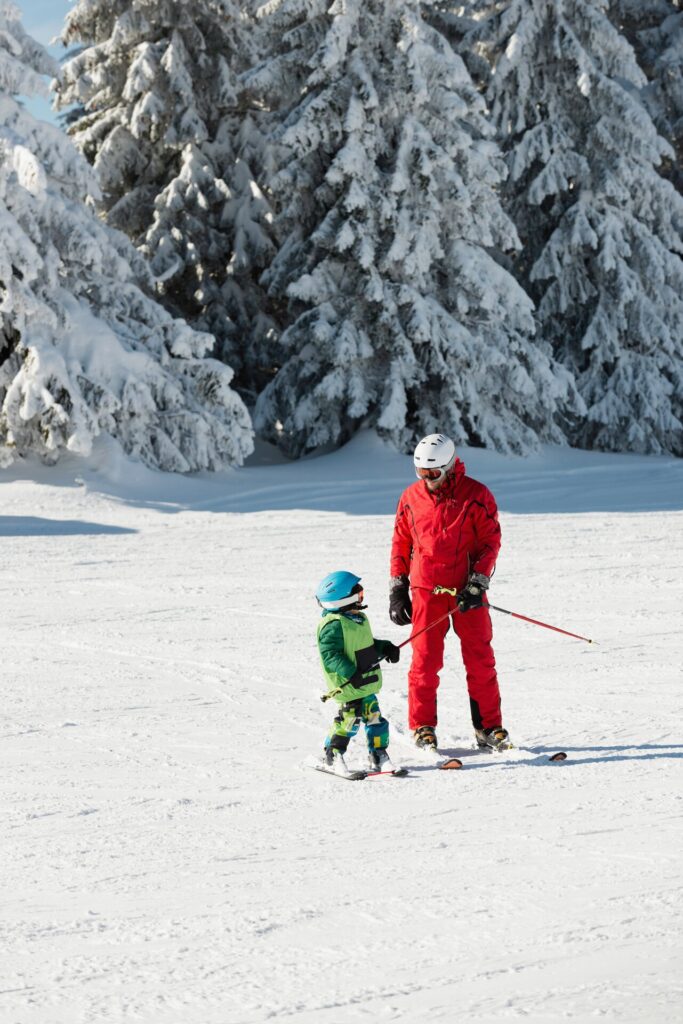
Skiing with Your Children
Many people ask me, what is the best age to start their children skiing. I usually tell them, “The sooner the better.” Actually, any time between age three and five is ideal, as they will learn instinctively and will develop a natural balanced stance on their skis. I started skiing when I was three and I really can’t remember learning.
It is important to make skiing a fun activity for young children. Don’t take them out when the weather is too cold, and pick terrain that they are comfortable on. Little children are often very happy to stay on easy slopes, especially if it has terrain along the edges which kids love. even though this might be boring for parents. At Sun Peaks the Village Platter lift has all kinds of fun terrain for the kids.
If you are not a strong skier yourself, it’s probably best to put your children in a ski school program. They often learn faster in a group setting and the instructors make sure they learn at their own pace and without developing bad technical habits. Children get the most out of ski school classes if they are confident and outgoing. Every child is different and only the parents can know what is best for their child. Whether you teach them yourself, or put them in the ski school, be happy knowing they are learning a sport they can enjoy all their life.
A skiing family looks forward to winter and the adventures they share together on the slopes give them memories to last a lifetime.
Tip 3
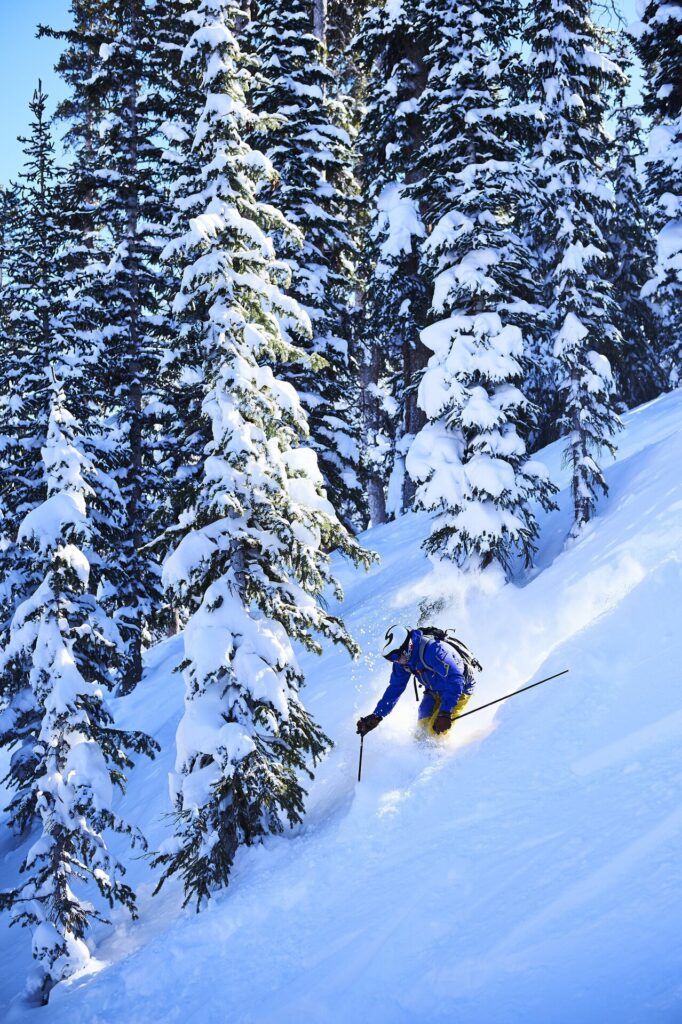
Balance
In skiing and in snowboarding, being in balance is really, really important. When you are in balance it is easy to turn your skis or board, but being the least bit off balance makes it difficult.
I am not an expert in snowboarding, but I do know that balancing on a snowboard is almost easier than on skis because your arms are free to move around and help you regain your balance. In skiing many people try to hold their arms in front making your upper body somewhat tense. I believe that it is better to relax your arms so they can move instinctively to help you balance.
How do you know when you are in balance? The simplest way to test it is to see if you can flex easily in the ankles and knees. If you can bob up and down with softness in your ankle joints you will be in balance. Interestingly, you can be balanced over the full length of your feet, and can also be balanced over the balls of your feet. I call this that ‘ready position’ and it is used in all sports where you need to react quickly, for example when receiving a serve in tennis, or going out of the starting blocks or shooting a basket.
In skiing, it is quite easy to stay in balance on an gentle slope, with your knees and ankles slightly flexed and the muscles in your legs relaxed. Normally you feel that your body weight is spread over the full length of your feet or gently over the balls of your feet. The problem comes when you are on a steeper hill. As you turn down the slope, your skis speed up and can go out from under you and you wind up ‘sitting back’. Instead of thinking about leaning forward to stay in balance, think of transferring your weight to the new ski by stepping onto the ball of that foot. If you do that, it is easy to turn because you will stay in balance, If you don’t do it, your weight winds up on your heels, turning becomes difficult and when you are not in balance it creates all kinds of other problems.
Tune into your feet. See if you can feel the body weight going from the ball of one foot to the ball of the other foot as you link your turns. At the end of the turn, you can settle back on to your full foot, but always start the turn over the ball of the foot. Try it first on a groomed blue run and then progress to steeper slopes. See if you can still feel the body weight landing on the ball of the new downhill foot. This sounds a bit complicated, but actually the concept is simple. If you are having trouble feeling the balls of your feet, check to see if you are holding your arms stiffly. Often just relaxing your arms lets you tune in to your feet!
Tip 4
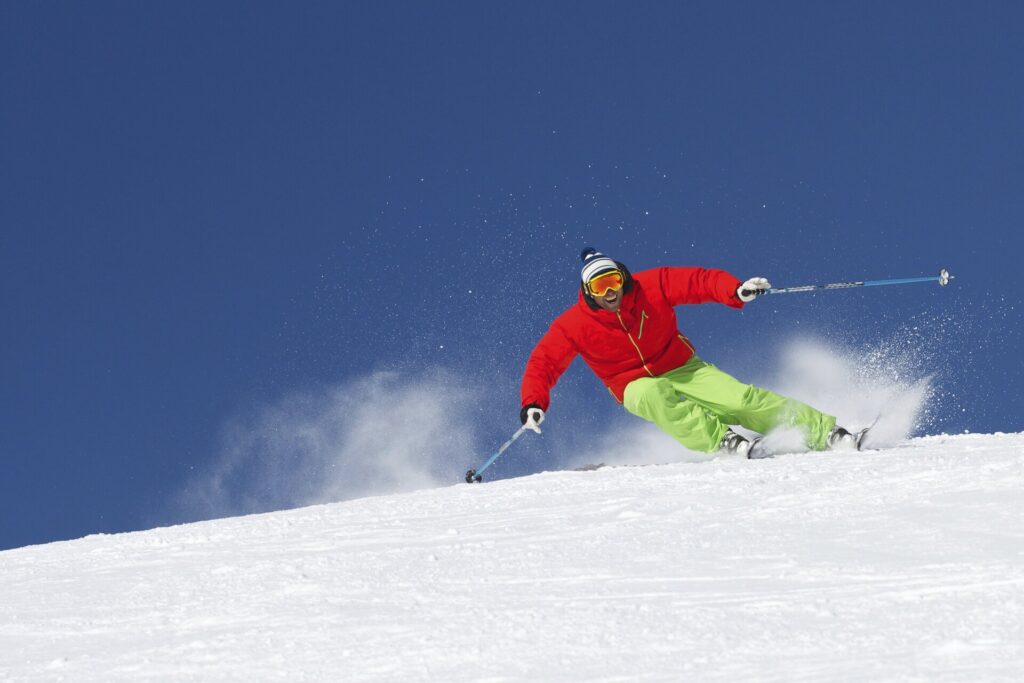
Weight Transfer
The feeling of skiing should be natural. When you walk, your body’s weight goes from one foot to the other, then you use your core muscles to move you ahead as you take a step. In skiing, though it is very subtle, we do the same moves. When your body’s weight moves from one foot to the other one, the unweighted foot stays on the ground carrying only the weight of that leg. This lets the muscles in each leg rest from turn to turn. Of course, in bottomless powder it is different, when the weight needs to be on both feet. It’s fun, but it definitely requires more fitness.
Tip 5
Edge Control, Carving & Sliding
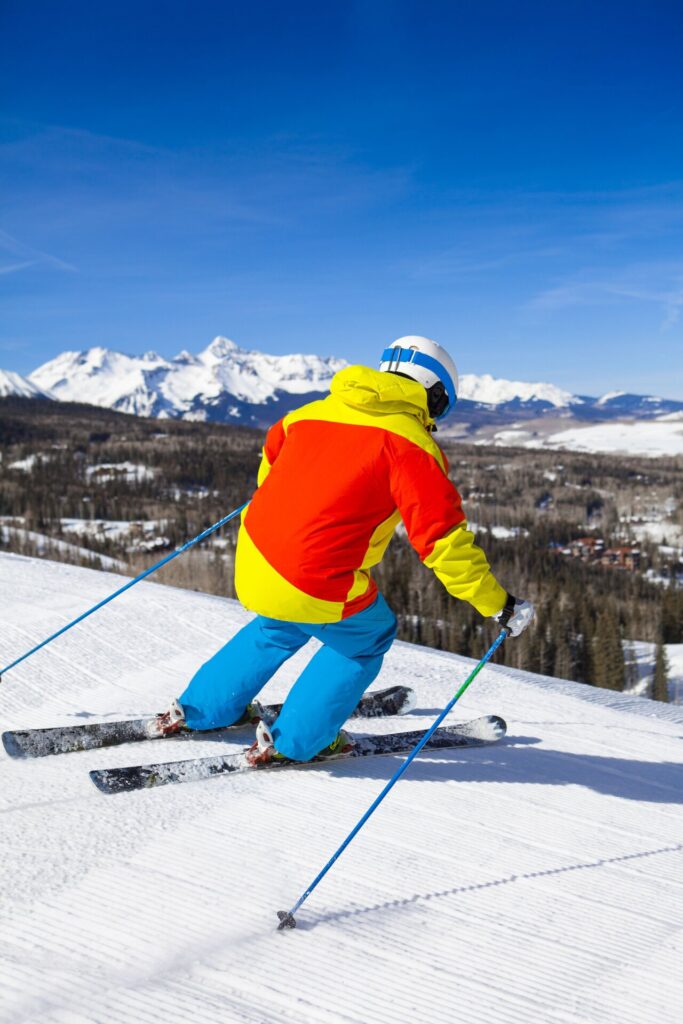
Carving skis have been with us for more than 25 years, but there is still some confusion as to what carving is all about. Some people think that if you are not carving, somehow you are not skiing well. When you tip your ski over on its edge, it will trace a clean line through the snow and the shape of the skis makes that line become a beautiful curve. The challenge is, that when a ski carves a pure line it goes very fast — and unless you are on a gentle slope it is easy to lose control. Before carving skis, skiers turned by pivoting the foot and skidding the ski through the turn, and they developed a feeling for how to control the skid to go as fast or slow as they wanted. Carving turns feel great on easy slopes where you have confidence to let the ski run without a skid. It is on blue and black runs where you need to develop your skidding skills to feel good.
Mastering the skidding of your skis is more difficult than carving them. The skidding of the edges is controlled by how much you pivot the feet and also by how much you tip the ski over. If you don’t tip the ski over enough, your skis will drift through the turn and not control your speed, and if you tip them over too much they will go into a carve and your speed will accelerate. Finess is required, and sensitivity to what is happening between the ski and the snow.
With many people still focussed on carving it is important to recognize that there is nothing wrong with skidding your turns if you want to slow down. The important thing is to control the skid and to feel comfortable balanced over the downhill ski through the turn. Sliding the edges of your skis on the snow is something we experience when we learn to snowplow and it remains an important skill that will always be part of good skiing technique.
Nancy’s Pocket Guide
Nancy has a good selection of ski tips written that you can request for printing in your club newsletter. Nancy asks you to send her a cheque for $25 payable to the Podium Club for use of her tips. The Podium Club supports Junior Ski Racing across Canada.
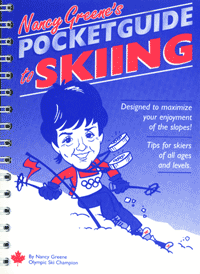
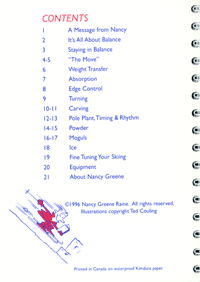
Nancy has written an excellent ‘Pocket Guide to Skiing’ printed on waterproof paper! This little booklet contains a wealth of information and is available from Nancy for $20.00, including mailing in Canada. For USA and international orders, please add $5.00 per copy. See the contact page for Nancy’s address.